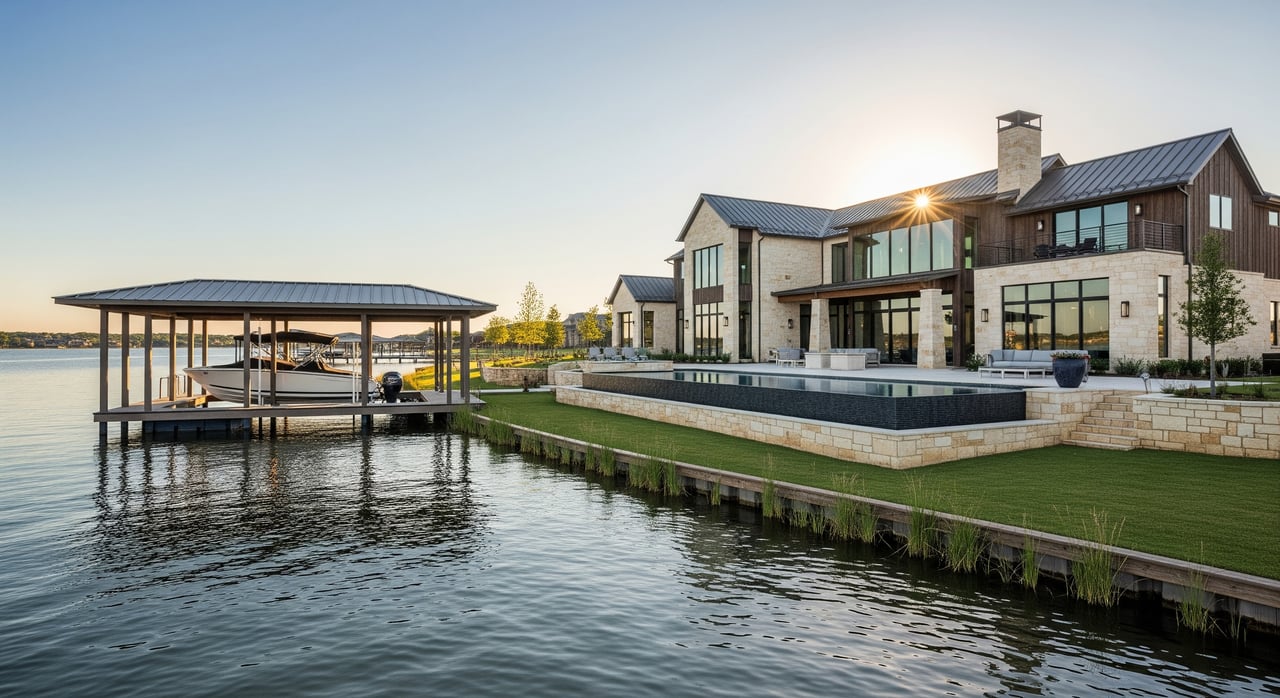
Two homes can sit on the same Lake Ray Hubbard shoreline and command very different prices. If you are preparing to sell or buy a lakefront estate, you want a clear way to read the waterline, the permits, and the comps so you do not leave money on the table. In this guide, you will learn how lakefront estates are valued around Rockwall, what features carry the most weight, and the pricing and due diligence steps that protect your outcome. Let’s dive in.
Why lakefront pricing is different
Lake Ray Hubbard spans multiple cities and counties. Local tax rates, permitting rules, and services vary by municipality. That means identical square footage does not equal identical value. What happens at the shoreline often matters more than what happens at the curb.
Waterfront homes also move with regional market conditions. When rates rise, the discretionary tier can soften first. Seasonality matters too. Showings typically increase in spring and summer, which can expand your buyer pool and support stronger pricing if inventory is tight.
Know your submarket on Lake Ray Hubbard
Each shoreline pocket has its own pricing rhythm. Rockwall’s east shore and the Harbor area are in high demand for access to dining and recreation. Heath features established neighborhoods and gated enclaves with estate lots. Rowlett and Garland offer varied coves and proximity to major roadways. Eastern Dallas neighborhoods on the lake have different tax structures and service providers. These differences affect buyer carrying costs, commuting convenience, and the scarcity of true waterfront.
Before you set a price or make an offer, review recent waterfront comps in the same cove or shoreline if possible. Local MLS data, along with county appraisal records, provide essential context on frontage, legal descriptions, and recorded easements.
Waterfront value drivers that move price
Water frontage length
Front footage is a key metric on Lake Ray Hubbard. More frontage usually adds value, but the price per front foot changes by neighborhood and exposure. Use it as a cross-check, not a stand-alone rule.
Dock and deep-water access
Private docks, covered slips, boat lifts, and actual depth at the dock matter. A property with dependable deep water suitable for larger boats can command a meaningful premium over a similar home with shallow or seasonal access.
Shoreline improvements and condition
Seawalls, rip-rap, and stabilization systems protect your investment. Replacement or major repair can be expensive. Buyers and appraisers will factor documented condition, age, and recent work into the price.
Orientation and views
Open-water views, unobstructed sightlines, and a shoreline sheltered from heavy wave action add appeal. A calm cove can be prized for paddlecraft and swimming. Open-water positioning can be prized for views and boating. Your value depends on the buyer segment you are targeting.
Lot topography and usable space
A gentle slope, terraces, and a usable flat yard make daily lake access easier. Steep grades can limit outdoor living unless hardscaped well. Usable space near the water is a lifestyle and value driver.
Private vs shared access
Deeded private waterfront or exclusive rights often price higher than community easements. Confirm the recorded documents so the access you see is the access you own.
Dock permits and transferability
Permitting history and transfer rules matter. A well-permitted dock with clear maintenance responsibility supports value. An unpermitted or nonconforming structure can lower price or slow a sale.
Beyond the shoreline: Home and neighborhood factors
- Condition and updates. Newer roofs, HVAC, and renovated kitchens and baths support higher appraisals.
- Storage and specialty spaces. Garages for boats, workshops, and guest quarters are popular for primary and second-home use.
- Neighborhood amenities. Proximity to marinas, community ramps, and the Rockwall Harbor lifestyle increases desirability.
- Schools and commute. Different districts and drive times influence buyer demand. Use neutral, factual information and verify with official sources.
- Property taxes and services. Tax rates vary among Rockwall, Heath, Rowlett, Garland, and Dallas. Ongoing carrying costs affect what buyers are willing to pay.
Risk, permits, and insurance that impact value
- Flood zones and elevation. Many parcels are in or near FEMA flood zones. An elevation certificate can improve insurance pricing and help your lender. Homes elevated above required base flood elevation can price differently from homes that may need mitigation.
- Shoreline and dock permitting. Cities and counties regulate piers, bulkheads, and shoreline work. Clear, transferable permits and documented maintenance reduce risk.
- Riparian rights and lake control. Reservoirs are managed bodies of water. Title language, surveys, and local records clarify what you own and what you can improve.
- HOA covenants. Rules on rentals, dock construction, or exterior standards can affect use and resale.
- Insurance and maintenance. Flood, wind, and liability coverage for dock areas add to monthly costs. Plan for dock and seawall upkeep and potential storm repairs.
How appraisers value Lake Ray Hubbard estates
Selecting the right comparables
Appraisers prioritize recent lakefront sales with similar frontage, dock features, view type, lot topography, and neighborhood characteristics. Non-waterfront comps have limited use for estates on the water. Start within the same cove or shoreline over the past 6 to 12 months, then widen carefully if needed.
Adjustments that matter
Expect adjustments for front footage, dock specs and lift count, seawall condition, elevation, finish level, and any guest quarters or boathouse. Market condition and seasonal timing adjustments can apply in faster-moving waterfront niches.
Pitfalls that skew value
- Treating front-foot pricing as uniform across the lake.
- Overlooking near-term dock or seawall repairs.
- Ignoring elevation differences that influence insurance and usability.
- Misreading access rights or easements that change true waterfront value.
Pre-list documentation to assemble
- Recent waterfront comps and nearby active listings
- Certified survey, recorded plat, and any easements
- Dock and seawall permits with maintenance history
- Flood-zone designation and elevation certificate
- Photos of shoreline, dock, and view corridors
- HOA documents and rules, if applicable
Seller pricing and listing strategies
Set your price with the lake in mind, not just the living room. Take these steps before you go to market:
- Verify the shoreline. Commission a current survey and gather dock and seawall permits. If a permit lapsed, renew or disclose clearly.
- Inspect what buyers cannot see. Hire marine and structural pros to evaluate the dock, lifts, seawall, and any septic systems. Get written estimates for needed work.
- Address high-impact items. Prioritize roof, HVAC, and shoreline repairs that influence appraisals. If you choose not to repair, provide quotes and reflect it in pricing.
- Get a valuation built for the water. Request a CMA or appraisal that adjusts for frontage, dock facilities, and elevation. Use front-foot numbers only as a cross-check against true waterfront comps.
- Time the launch. Spring often brings more showings and boat-in-the-water buyers. If inventory is scarce, a strategically firm price can create urgency. In a balanced market, price near the strongest recent comps and leave room for negotiation.
For presentation, lead with the lake. Use professional waterfront photography and drone media that show orientation to open water, proximity to marinas, and the exact shoreline condition. Highlight verified facts upfront: frontage feet, dock specs, lifts, permitted status, seawall condition, flood zone, and any recent shoreline work. Clear documentation supports stronger offers and cleaner appraisals.
Buyer due diligence to protect your offer
Approach the shoreline like an inspector and the title report like a detective. Focus on these essentials:
- Title and survey. Confirm recorded waterfront footage, boundaries, and any access or utility easements that cross the shoreline.
- Dock and seawall. Get a marine contractor to assess condition, remaining life, and replacement cost. Verify that permits are valid and transferable.
- Flood and insurance. Request or order an elevation certificate. Obtain quotes for homeowners, flood, and umbrella liability if you plan to host guests on the dock.
- HOA and municipal rules. Check dock, lift, and rental rules that affect your intended use and potential resale.
- Environmental and recreational context. Ask about historical water quality issues, vegetation, siltation, and no-wake zones that shape daily use.
Use your findings to negotiate. Verified repair bids, permit gaps, or elevation challenges are legitimate levers for price or seller concessions.
Timing and market context
Regional housing conditions set the background for every lakefront sale. Inventory, days on market, and interest rates influence both seller confidence and a buyer’s willingness to pay a waterfront premium. Monitor local MLS data for Lake Ray Hubbard submarkets, and remember that the waterfront niche can move differently from the broader market. Seasonality favors spring and early summer, but the right price and a strong presentation can win attention any time of year.
What you can expect with The Agency Rockwall
When you sell a lakefront estate, you need more than a sign in the yard. You need a boutique strategy that tells the full shoreline story. Our team pairs white-glove service with elevated media, including professional photography, cinematic video, and 3D tours that showcase frontage, views, and dock features. We prepare data-forward listing packages that document permits, elevation, and shoreline condition so buyers and appraisers see the value clearly.
If you are buying, we help you evaluate frontage, depth, and permits, then model insurance and maintenance so you understand the true monthly picture. Our specialists work the entire Lake Ray Hubbard shoreline, from Rockwall and Heath to Rowlett, Garland, and eastern Dallas neighborhoods, and we tailor advice to each micro-market.
Ready to price with confidence or shop the shoreline with clarity? Connect with the local team at The Agency Rockwall to start a data-driven plan for your lakefront move.
FAQs
How are Lake Ray Hubbard lakefront homes valued differently from inland homes?
- Appraisers emphasize waterfront-specific features like frontage, dock type and condition, shoreline improvements, view, and elevation, then adjust for home size and finish.
Does price per front foot work on Lake Ray Hubbard?
- Use it only as a cross-check. Front-foot value varies by neighborhood, exposure, view, and dock amenities, so recent local waterfront comps should lead your pricing.
Do I need a permit for a dock, and can it transfer to a buyer?
- Yes, docks are subject to local permitting. Transfer rules vary by jurisdiction and HOA, so verify permit status and transferability before listing or making an offer.
How does flood insurance affect affordability on the lake?
- Flood-zone placement and your elevation certificate drive premium costs. Quotes can change the effective monthly payment, so obtain them early in the process.
What documents should I gather before listing a lakefront estate?
- Survey and plat, dock and seawall permits, maintenance records, elevation certificate, flood-zone info, HOA rules, and recent waterfront comps strengthen your pricing case.
When is the best time to list a Lake Ray Hubbard estate?
- Spring and early summer typically bring more showings for waterfront homes. If inventory is low, a well-prepared listing can perform well year-round with the right price and marketing.